
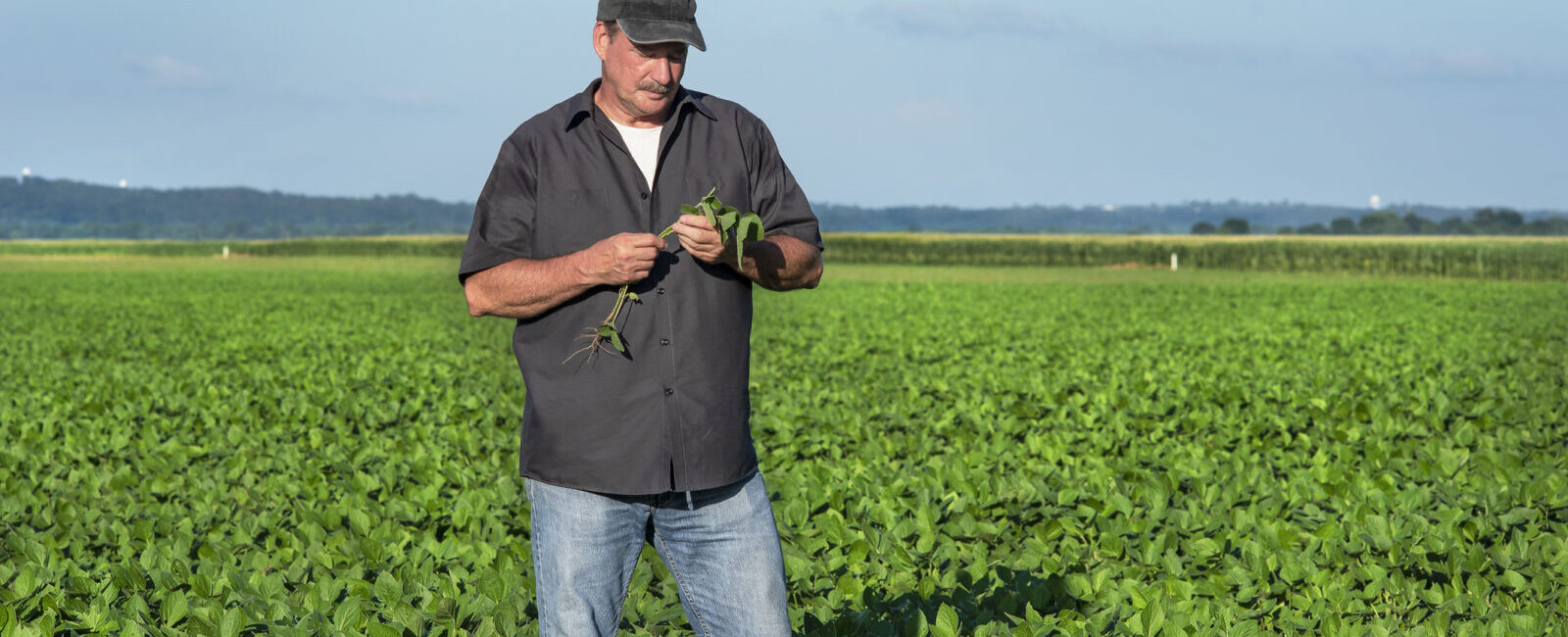
During Pinion’s 2026 Northern Agribusiness Summit in Minnesota this past February, Carolina Vargas, Ph.D., economist and farm business management consultant at Pinion, shared a case study that challenged some common assumptions about farm performance.
Analyzing four years of data from commodity crop producers across the Midwest, her team found that roughly 20% of farmers consistently outperformed the other 80%. These operations weren’t just having better years — they were widening the gap.
The question isn’t just why this gap exists; it’s what today’s producers can learn from top performers and apply within their own operations. Because the strategies driving consistent profitability aren’t about better luck or better land — they’re about better decisions.
A Tough Year for Most Farmers
For many producers, 2025 came down to a brutal equation. Input costs surged, chemicals jumped nearly 20%, while fertilizer prices remained elevated; leaving margins razor thin or worse.
On average, the bottom 80% of producers posted a net income of negative $58/acre, per farmer.
It felt like a losing game. But not for everyone.
A distinct group of corn, wheat, and soybean producers managed not only to stay profitable, but to strengthen their positions.
What Set the Top Performers Apart
“Underperformance in today’s political and economic climate usually boils down to two things: an income problem, a cost problem, or a combination of both,” explains Vargas.
Using Pinion’s SnapShot benchmarking tool, her team identified several consistent traits among top-performing operations:
- Stronger returns on assets and equity, indicating more effective use of capital
- Lower break-even costs, allowing for healthier margins even in tight markets
- Lower variable costs as a percentage of income
But the biggest differentiator was operational efficiency.
Top producers were significantly more disciplined in how they managed both machinery and labor:
- Machinery efficiency: Approximately 31% more efficient per dollar spent, driven by careful evaluation of equipment needs and avoiding overinvestment
- Labor productivity: Generated about $56,000 per employee compared to roughly $47,000 among lower-performing operations
Notably, financing was not the advantage. Interest rates and financing costs were nearly identical across both groups.
The real difference came down to repayment capacity:
- Top performers could cover financing and lease obligations 2.7 times over
- The bottom 80% averaged just 1.1 times coverage
That cushion provides flexibility in difficult years — and positions these farms for future growth.
The takeaway is clear: this isn’t about better land or better luck. It’s about better management.
Where Top Producers Are Pulling Ahead
The gap between top and average producers isn’t accidental, it’s driven by intentional, repeatable decisions. The data shows that high-performing operations focus less on reacting to market conditions and more on building systems that support consistent performance over time.
While every operation is different, several core practices consistently show up among top performers — and they are within reach for producers willing to apply them with discipline.
3 Steps to Close the Gap
1. Financial Visibility Drives Better Decisions
Top performers have a clear, real-time understanding of their numbers.
- Build detailed cash flow projections and profit-and-loss statements
- Maintain accurate, market-based balance sheets
- Structure leases strategically (flex rents, payment timing) to preserve liquidity
- Explore additional revenue streams or efficiency gains, such as government programs or custom work
2. Operational Discipline Improves Efficiency
Efficiency doesn’t happen by accident — it’s managed.
- Evaluate equipment, labor, and field performance after every season
- Maintain a proactive machinery replacement plan
- Set clear expectations and accountability for employees
- Align labor skills with the right roles to maximize productivity
3. Strategic Relationships Strengthen Financial Resilience
Strong relationships and informed decisions create financial advantages over time.
- Regularly seek competitive bids from lenders and suppliers
- Fully understand financing terms, rates, and fees
- Use vendor terms strategically to manage cash flow
- Maintain consistent communication with their lenders
- Implement a proactive risk management plan
You Don’t Have to Do It Alone
In an era of shifting trade policies, global uncertainty, and volatile input costs, it’s easy to feel like the deck is stacked against you. But the data tells a different story.
“Top-performing producers aren’t relying on luck. They’re building systems, making disciplined decisions, and working with advisors to identify inefficiencies before they become costly problems,” says Vargas.
While many operations are reacting to the market, the top 20% are using disciplined management systems and advisor relationships to build buffers that protect them regardless of what happens in Washington, D.C.
You can’t control the political environment, but you can control the systems, data, and decisions that guide your operation. Closing the gap starts with understanding where you stand.
Wondering where your operation stands? Contact a Pinion ag advisor to assess and benchmark your operation — and provide the insights you need for better efficiency, decisions, and management.